Pole, Duct and Chamber: The Ground-Level Work Behind a Fibre Order
 6 min read
One household orders fibre and is connected in an hour. Another on the same street waits six weeks and ends up with a trench across a lawn. The order was identical and the property was not, because the work depends on what already exists underground.
The vocabulary of ducts, poles and chambers is not technical decoration. Each term describes a different amount of work, and each corresponds to a different bill.
1. Ducts and why they make connections cheap
A duct is a buried tube through which cable can be pulled without excavating. Where one already runs from the street to the property, a connection can be completed quickly and at low cost.
Most existing telephone ducts can be reused, which is why many fibre installations are surprisingly undramatic. The expensive cases are the ones without a usable duct.
2. Blocked, collapsed and full ducts
Ducts age, fill with debris or are occupied by other cables, and a blocked duct is functionally the same as no duct at all. Clearing one is skilled work and sometimes impossible.
This is one of the most common reasons an installation is rescheduled or upgraded from a standard to a chargeable job. The engineer discovers the problem on the day rather than in advance.
3. Poles as an alternative to digging
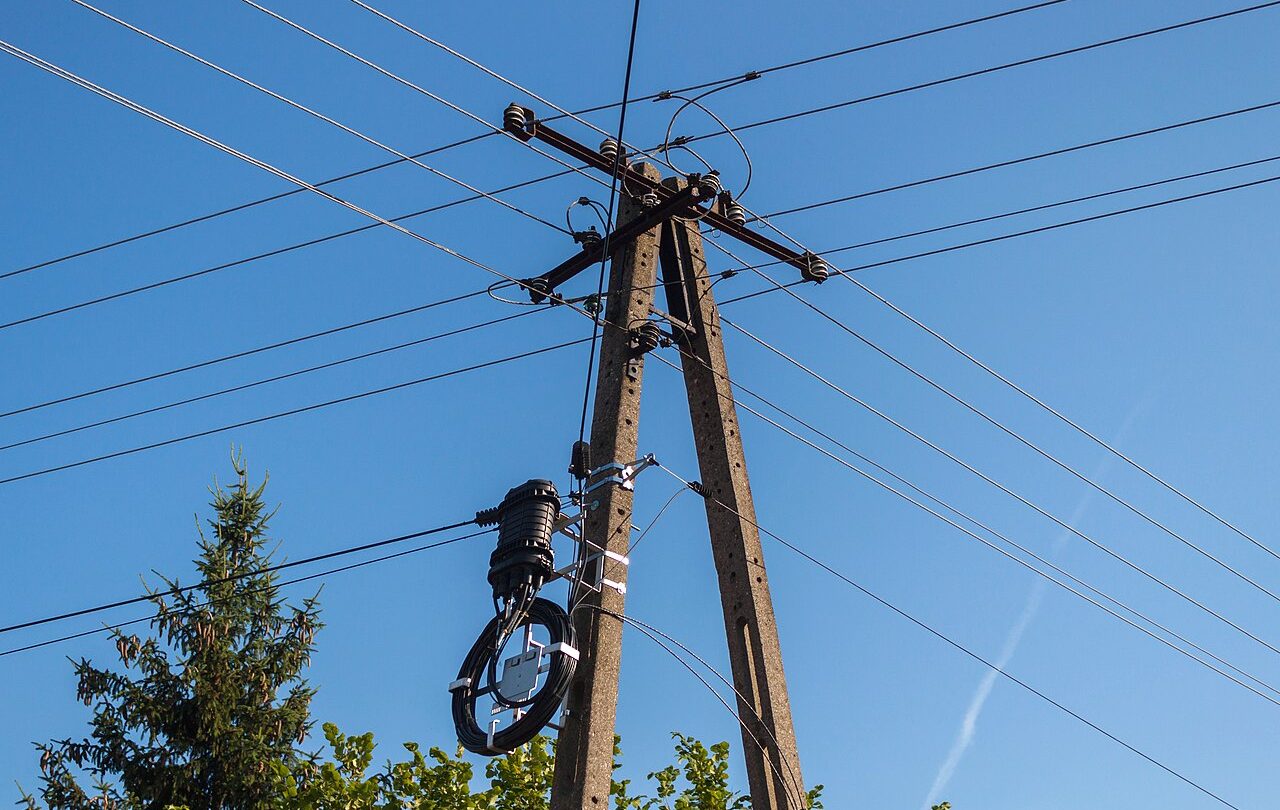
Where a pole serving the property exists or can be installed, cable can be run overhead without excavation. Overhead deployment is faster, cheaper and generally more reliable than a hasty trench.
It is also visible on the property and can require a wayleave where the pole is not on the operator’s own land. Those agreements occasionally add delay even when the work itself is simple.
4. Chambers and the joints beneath the pavement
Chambers are the access points in the pavement where cables are spliced and routed. They are what make the network maintainable, and they are also where capacity constraints appear.
A chamber that is full, obstructed or structurally failing can block a connection to several nearby properties at once. Repairing one is a civil engineering task rather than a cabling one.
5. The drop from the boundary to the building
The final segment from the network boundary to the property is the part most likely to differ between neighbours. Length, surface and obstacles all change the work required.
A short run across a driveway is trivial. The same distance across a listed wall, a mature root system or a shared courtyard is not, and the price reflects that.
6. Internal wiring and where the router lands
The engineer usually needs to bring the cable inside and place an optical termination point. Where that point ends up determines how well the rest of the home network can be arranged.
Deciding the location in advance is a genuine improvement. A termination point in a hallway cupboard makes good coverage difficult; one in a central room makes it straightforward.
7. Wayleaves and third-party land
Where the cable must cross land owned by someone else, a wayleave is required. These agreements take time and occasionally fail, leaving the property unserved despite the network being metres away.
This is the classic reason a rural property cannot be connected, and it is rarely solvable by the household. Knowing early prevents months of waiting for an answer that will not change.
8. When a standard installation becomes chargeable
Installations are priced on assumptions about ducts, surface types and distances. When those assumptions fail, the job moves into a chargeable category and the household is quoted an additional sum.
Asking for the assumptions in advance, and describing the property accurately, reduces the chance of a surprise on the day. Photographs of the entry point help considerably.
9. Who pays for what
Routine connection work is generally covered by the provider, while unusual civil works may be charged. The boundary between the two is defined in the terms and varies between operators.
Reading that definition once, before ordering, is the difference between predicting the cost and discovering it. Where a charge is likely, getting a quote first is standard practice and should be requested.
10. Timescales and the rescheduling cycle
Civil work depends on permits, crews and weather, and rescheduling is common. Each reschedule costs the household another wait rather than another cost.
Where a delay is caused by a blocked duct or a permit, the honest answer is usually a range rather than a date. Asking what the specific blocker is produces a more useful conversation than asking when.
11. Preparing a property before the visit
Clear the route, identify where the cable should enter, decide where the termination point goes, and confirm that any required permission has been obtained. All of it takes an hour.
Households that do this consistently get a neater installation and fewer return visits, which is a better outcome than any amount of negotiation afterwards.
12. What the terminology tells you
Duct means cheap, pole means overhead, chamber means shared infrastructure and wayleave means someone else’s permission is required. Each term points to a different cost and a different delay.
Reading an installation quote with those four meanings in mind turns an opaque document into a fairly clear statement of what will happen on the day.
13. How the route affects the price you are quoted
Quotes are built from assumptions about the route, and those assumptions determine whether the job is standard or chargeable. Describing the property accurately at the point of ordering prevents most surprise charges.
Photographs of the entry point, the boundary and the surface types are the most useful thing a household can supply.
14. Shared access and communal areas
Flats, conversions and properties with shared driveways require agreements that individual houses do not. Those agreements often delay installation more than the physical work.
Asking the managing agent or the landowner early is what prevents a wait that has nothing to do with the network.
15. What happens when the job changes on the day
Where the engineer finds conditions different from those assumed, the work may be rescheduled or re-priced. Either outcome delays the connection and both are more likely where the property was described inaccurately.
A short call before the visit, describing what the engineer will find, occasionally avoids the whole problem.
16. The terminology as a shorthand for cost
Duct, pole, chamber and wayleave each imply a different amount of work and a different likelihood of delay. Reading a quote with those four meanings in mind makes it far more legible.
Households that understand the vocabulary can predict which part of the job is likely to cause trouble.
17. Why the same property gets three different quotes
Providers price installation from their own assumptions and their own field experience, and those differ. The variance is largest at properties with unusual access or long routes.
Obtaining quotes from several providers is therefore worthwhile, and the cheapest is not always the one with the least risk of rescheduling.
18. The preparation that reduces the charge
Clear access, a decided entry point and an accurate description of the surfaces reduce the chance that the job changes on the day. That is also what keeps the quote valid.
An hour of preparation before the visit is the most effective way to avoid a revised price.
The difference between a one-hour installation and a six-week project is almost always underground. Learning four words is enough to predict which one you are getting.
Nicholas Burnham
Tests household broadband packages and writes up what the small print actually costs. Everything here is measured or sourced, never taken from a press release.