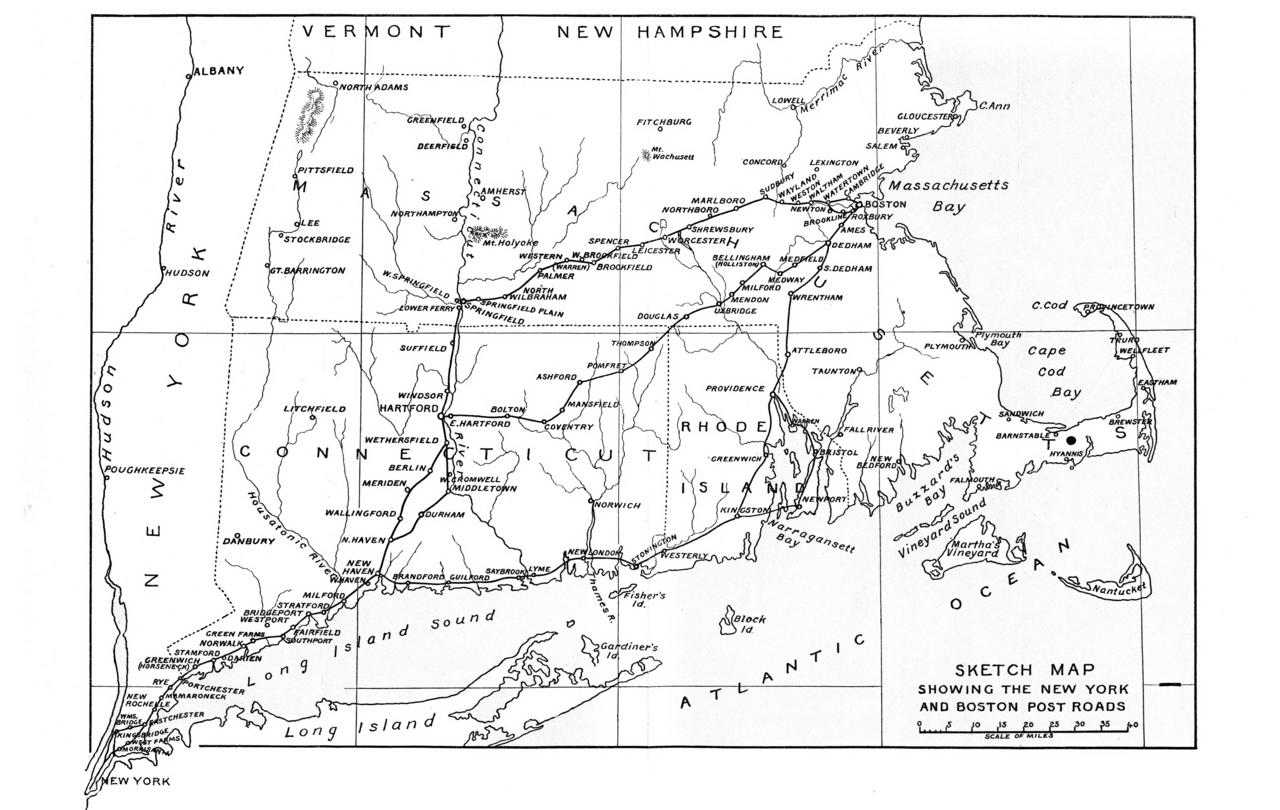
One household plans a move around a coverage map showing full fibre across the whole neighbourhood. Another checks the specific address and finds it excluded. The map was not wrong about the neighbourhood, only about that property.
Coverage maps are planning documents rather than measurements, and reading them as measurements leads to decisions that do not survive contact with an availability checker.
1. What the map is actually showing
Most published maps show intended coverage over a programme period, coloured by whether an area is planned, under construction or live. The colour reflects a plan rather than a completed connection.
The distinction matters because planned areas can be revised, and the properties inside a coloured area are not enumerated anywhere on the map itself.
2. Postcode granularity and its limits
A postcode covers a set of addresses that may span different construction types, different access arrangements and even different networks. Colouring it as a single unit hides all of that variation.
Where a postcode contains both houses and flats, the flats may sit behind a shared access arrangement that the builder has not solved. The postcode is green; the individual addresses are not orderable.
3. The gap between built and orderable
Cable can be in the ground and the network still not open for orders, because testing, commissioning and database updates all take time. This gap can last weeks or months.
Households that read the map as availability and order immediately often find the order rejected. Waiting for the address-level result avoids the wasted effort.
4. Multi-dwelling buildings and access
Blocks of flats, conversions and properties with shared driveways require agreements that individual houses do not. These agreements are negotiated property by property and frequently lag the street work.
This is the most common reason an address in a green area cannot be ordered. It is also the reason asking the managing agent early can materially shorten the wait.
5. New builds and the sequencing problem
New housing is often connected by the developer as part of the build, using an agreement that determines which networks can serve the site. That choice can lock the properties to a single provider for years.
Buyers rarely see this agreement, and it explains why some new estates have excellent connections and others cannot be served by the obvious national providers at all.
6. How maps get coloured in the first place
Builders colour areas as they complete surveys and secure permissions, so the map advances ahead of the physical work. The colouring reflects commercial confidence rather than completed construction.
Understanding this explains why a map can show a whole town as covered while the roads are untouched, and why the colour sometimes retreats after a survey finds unexpected cost.
7. Reading a map for a house purchase
When a move depends on connectivity, the check belongs at the address and should be repeated shortly before exchange. Availability results change, sometimes in a household’s favour and sometimes not.
Photographing the result and the date is worth doing, since the answer can shift between the initial search and the completion of the purchase.
8. The other networks that are not on the map
Cable operators, fixed wireless providers and smaller regional builders rarely appear on a national fibre map. Their coverage can be excellent in places where the big programme has not reached.
Checking every plausible operator rather than the most visible one occasionally turns up a good connection in an area the main map has written off.
9. Challenging a result that looks wrong
Where a neighbour can order and you cannot, an enquiry is worth making. The difference usually has a specific cause that can be investigated, and sometimes corrected.
Common causes include an incorrect address record, a missing premise entry in the database and a boundary drawn narrowly. Reporting the discrepancy is the only way to find out which applies.
10. Planning around uncertainty
Where fibre might arrive in two years or might not arrive at all, the sensible approach is to take the best available connection now on a term that does not outlast the uncertainty.
A shorter contract costs more per month and preserves the option to switch the moment the better network opens. That premium is a rational price for flexibility in a changing area.
11. The map as a starting point only
Maps are useful for narrowing the field and useless for final decisions. The only question that matters is whether a specific address can be ordered today, and that has a specific answer.
Getting that answer takes a few minutes per provider and removes the entire class of disappointment that follows from trusting a colour on a map.
12. A short checking routine
Check the address rather than the postcode, check each operator separately, check the connection technology offered, and check again shortly before committing to anything.
Four checks, repeated when something changes, and a household never again discovers that the map was describing an intention rather than a service.
13. Where the map and the pavement disagree
When a map shows coverage and the pavement shows nothing, the map is describing a plan and the pavement is describing progress. Both are accurate about different things.
Recording both, and checking the address-level result periodically, keeps the picture current without relying on either alone.
14. What to ask a builder directly
Whether the specific address is included in the current programme, what stage the work has reached, and what remains before orders open. Three questions that produce a more useful answer than any published map.
Builders answer these questions routinely and their answers are more current than any public document.
15. Consequences for a household planning to move
Where connectivity is a factor in a move, the check belongs at the address and should be repeated shortly before exchange. Availability changes in both directions.
Recording the result and its date gives a reference point if the answer later changes.
16. The habit that prevents disappointment
Check the address rather than the postcode, check each operator separately, check the technology as well as the availability, and check again before committing. Four checks that take a few minutes.
Households that do this are rarely surprised by coverage, and they order as soon as service genuinely opens.
17. Why the map is the wrong document for a decision
Maps communicate intent to a region while decisions are made about individual addresses. The two operate at different scales and cannot be substituted for one another.
Using the map to narrow the field and the address checker to decide is the correct division of labour.
18. Where the maps are genuinely useful
Maps show the direction of travel and identify which operators are active in an area. That is useful context when choosing which providers to approach.
They also indicate whether a second network is coming, which affects how long a contract is worth signing.
19. The one check that replaces the map entirely
Querying the address with each operator in turn produces a definitive answer for today, which is what any decision requires. It takes a few minutes per provider.
Nothing else on this subject needs to be consulted once that answer is in hand.
Every coverage map is a plan with a colour scheme. Treating it as a measurement is the mistake, and correcting that mistake costs one address-level lookup.

Nicholas Burnham
Tests household broadband packages and writes up what the small print actually costs. Everything here is measured or sourced, never taken from a press release.