One household sees engineers working outside and assumes broadband will improve within weeks. Another sees the same vans, understands that the work is three separate stages, and does not start ordering until the network is actually live.
What happens between the first trench and a working connection is a sequence with distinct phases, and knowing the sequence makes the wait far less confusing.
1. Survey work before any digging starts
Before construction, a survey establishes where ducts run, which poles can carry new cable and which surfaces can be disturbed. The survey often happens months before anything visible appears on the street.
Its output is a design that determines which properties can be connected cheaply and which will need additional work. This is why two addresses on the same street can be quoted completely different installation costs.
2. The backbone and the distribution layer
Builders lay a backbone through the area and then distribute from it to individual streets. The backbone may pass through your road long before the branch that serves your property exists.
Seeing cable in the pavement therefore indicates that construction has reached the area rather than that service is available. The two events can be separated by many months.
3. Ducts, poles and existing infrastructure
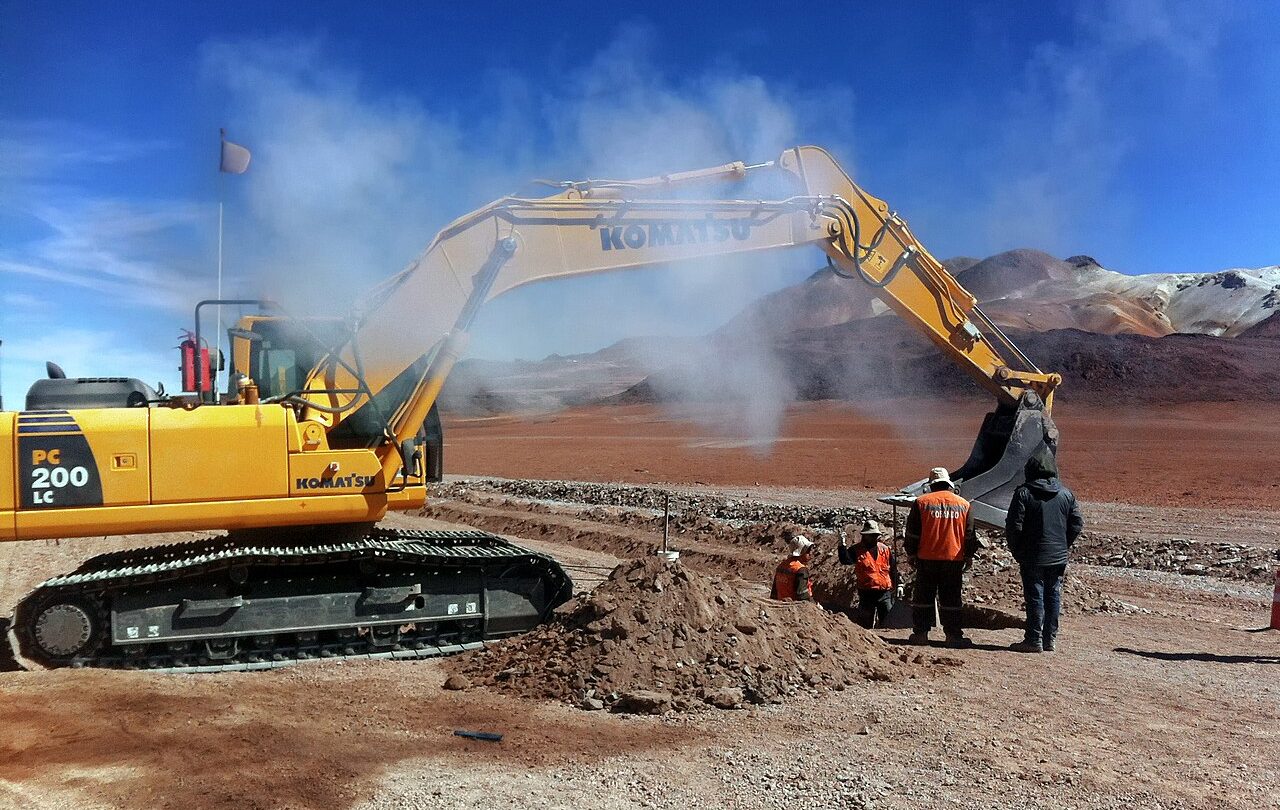
Where usable ducts already exist, new fibre is pulled through them with comparatively little disruption. Where they do not, builders either dig, or use poles, or decline to serve the property.
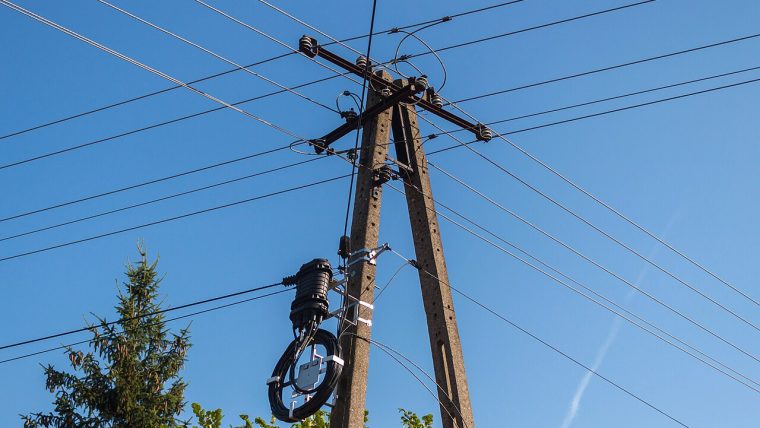
Pole-mounted distribution is faster and cheaper to deploy and is common in areas where digging would be prohibitively expensive. It also means the connection arrives overhead, which some households dislike and most accept.
4. The serving of individual properties
The final stage connects the distribution network to each building, which usually requires a visit and sometimes a new cable from the boundary. This stage is what converts area coverage into a bookable order.
Providers typically open orders street by street as this work completes. Whether your specific address is orderable is a database question rather than an inference from what is visible.
5. Why neighbours get different answers
Even on a completed street, individual addresses may be marked as not yet available or as requiring a chargeable installation. The reasons range from a missing duct to a shared access arrangement the builder cannot use.
Checking the address itself is therefore essential. Postcode-level availability checkers frequently report a whole area as live when a specific property is not.
6. What the milestone dates mean
Build programmes publish indicative dates that shift as survey findings and permissions change. A date two quarters away is a plan rather than a commitment.
Treating the published date as information rather than as a promise avoids a great deal of frustration, particularly in areas where the programme has already been revised once.
7. Permissions and the delays they cause
Builders need permission for road closures, wayleaves across private land and access to certain structures. These permissions are granted by different bodies and each can add delay.
Delays from this source are rarely visible from the street, which makes a stalled programme look like inactivity. It is usually administrative rather than technical.
8. The difference between wholesale and retail
Infrastructure is usually built by one company and sold to several retail providers, who then offer service over it. The builder and the brand on your bill are frequently different organisations.
Understanding this explains why a single network can be sold under many names at different prices. It also means comparing providers on the same network is a genuine like-for-like comparison.
9. What households can do during the build
Register interest with the retail providers and with the builder where that is possible. Registration numbers influence commercial decisions about which streets are prioritised, particularly at the margin.
Beyond that, the useful action is to keep checking the address-level checker rather than the postcode-level one, and to be ready to order when it turns green.
10. Ordering on day one and what to expect
An order placed as soon as the address is live is usually scheduled within a few weeks. Being early in the queue occasionally secures a promotional installation price.
The installation visit involves a cable run and some drilling, and it is worth planning where the entry point should be before the engineer arrives. Households that decide in advance end up with a tidier result.
11. When the build never arrives
Some properties remain unserved for years, either because the cost is unjustifiable or because access cannot be arranged. Those households depend on part fibre, cable, fixed wireless or another alternative.
Knowing that the build is not coming is itself useful, because it ends the waiting and redirects the effort toward a connection that can actually be ordered.
12. Reading the signs correctly
Vans, trenches, cable drums and pole work each indicate a different stage, and none of them on its own means the address is ready. The only reliable indicator is the address-level availability result.
Households that check that result rather than the street are consistently less disappointed by the timetable, and they are first to order when service genuinely opens.
13. What to do while the build is progressing
Register interest with the retail providers and, where possible, with the builder. Registration numbers influence prioritisation at the margin and cost nothing to provide.
Beyond registering, the practical action is to keep checking the address-level result rather than the street.
14. Preparing the property in advance
Deciding where the cable should enter and where the termination point should sit, before any visit is scheduled, produces a tidier installation. Households that decide on the day frequently regret the placement.
The considerations are the same as for any installation: central position, mains power nearby, and a route that can be concealed.
15. How orders are scheduled once live
Once an address is orderable, the provider schedules a visit, usually within a few weeks. Being early in the queue occasionally secures promotional terms on installation.
The visit itself takes an hour or two where the route is straightforward.
16. Reading the programme’s own announcements
Builders publish progress updates that are more useful than the coverage map, because they describe completed work rather than intentions. These updates are frequently buried on a regional page.
Following the update for your area gives a more accurate sense of timing than any coloured map.
17. What the build does and does not change
A build changes which networks can reach a property, which in turn changes which providers can be chosen and what they charge. It does not change the property itself or the work required to connect it.
Where the new network reduces the number of providers able to sell service, the pricing advantage may be smaller than expected.
18. How to use the build as a negotiating point
Where a second network is arriving shortly, that fact is useful leverage with the current provider. It is credible, dated and verifiable.
Mentioning it at renewal is a reasonable and often effective move, particularly where the second network’s pricing is already public.
19. Where the build changes the best choice
Where a build is imminent, a short contract on the existing network preserves the option to move when it completes. A long contract removes that option precisely when it becomes valuable.
The premium for the shorter term is a price paid for the ability to take advantage of the build.
Fibre arrives in stages that are largely invisible from a front window. The stage that matters is the one recorded against your address, and that is the one worth checking.

Nicholas Burnham
Tests household broadband packages and writes up what the small print actually costs. Everything here is measured or sourced, never taken from a press release.