One household buys a dedicated business line and uses a fraction of it. Another buys a consumer fibre package, shares capacity with the street, and never notices. The dedicated line was not wasted exactly, but it solved a problem the household did not have.
Shared and dedicated fibre are priced very differently because they promise different things, and most homes only need one of them.
1. What sharing means in practice
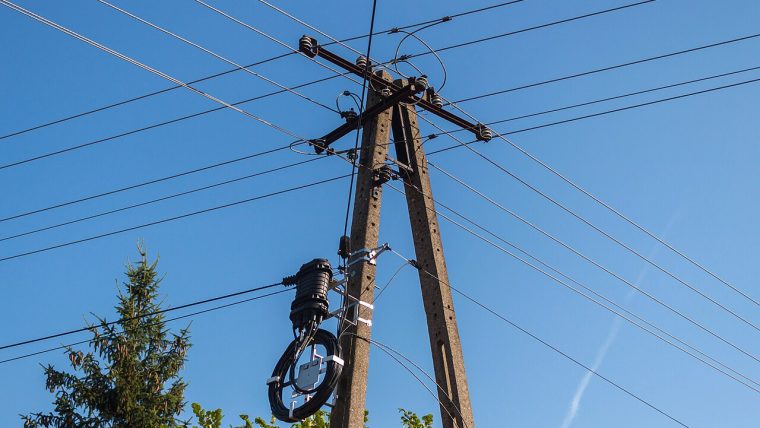
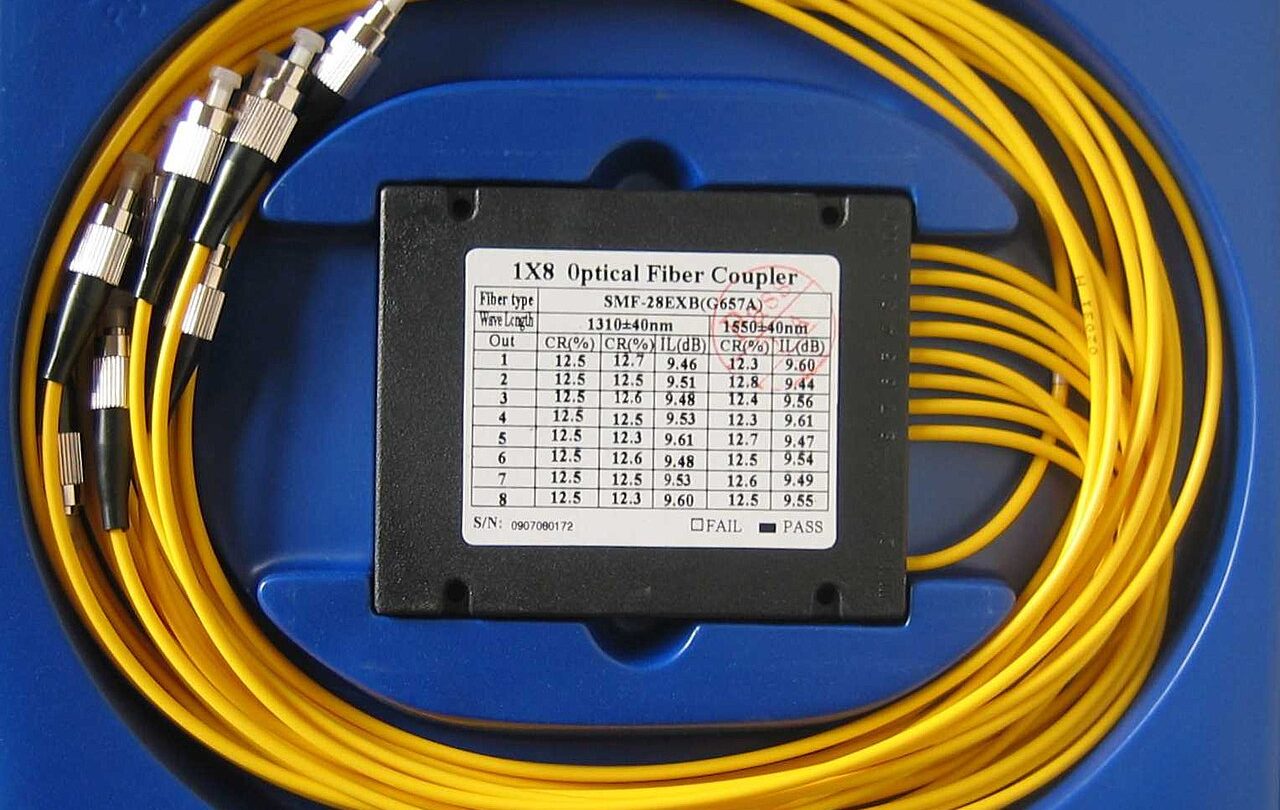
Consumer fibre is shared at points between the property and the provider’s core network, with the sharing ratio deciding how much of the capacity survives at busy times. Ratios are rarely published and vary by operator.
Because fibre capacity is large to begin with, a moderate sharing ratio usually leaves plenty of headroom even at peak. This is why shared fibre rarely feels shared.
2. What dedicated actually guarantees
A dedicated line provides capacity used by one customer, with a service level agreement covering availability and repair times. Nothing is shared, so nothing else can consume it.
That guarantee is genuinely valuable to a business whose revenue depends on the connection. It is worth much less to a household whose worst case is a delayed film.
3. The price difference and what it buys
Dedicated lines frequently cost several times what a consumer package costs for the same nominal speed. The premium buys the service level agreement, the fixed capacity and faster fault response.
Where those things have financial value, the premium is rational. Where they do not, the money buys reassurance rather than performance.
4. Contention in the consumer network
Consumer contention is managed by adding capacity as demand grows, so performance degrades gradually rather than failing. Households notice the effect at peak hours as a reduction rather than an outage.
This behaviour is what makes shared fibre acceptable for nearly all domestic use. The connection gets slower when everyone is online and remains entirely usable.
5. When a household genuinely needs more
Households running servers, hosting services, operating a business with contractual uptime requirements or supporting multiple heavy home workers may benefit from dedicated capacity.
Even then the decision should be tested. Measuring peak-hour performance for a month establishes whether the shared connection is actually failing, and it frequently is not.
6. Service level agreements and what they cover
An SLA specifies availability targets and repair windows, often with credits payable when the target is missed. Consumer terms generally promise best efforts and a slower response.
Reading an SLA before paying for it is worthwhile, because the credits are usually modest and the response times are what matter in practice.
7. Symmetry and the business line advantage
Dedicated lines are typically symmetrical, which matters for anyone uploading substantial data. Consumer fibre is often symmetrical too, which reduces this advantage considerably.
Where the consumer package is already symmetrical, the remaining differences are the SLA and the absence of contention. Those are the only two things the premium is buying.
8. Installation and commitment
Dedicated lines usually come with longer contracts, higher installation costs and stricter terms. Consumer packages are considerably more flexible.
The commitment is the reason a dedicated line should be a deliberate decision rather than an upgrade made in response to one bad week.
9. Mixed approaches and household businesses
Some households run a consumer connection as the primary line and a second connection as failover, which is usually cheaper than a dedicated line and covers most failure modes.
A failover line on a different technology also protects against network-level faults, which a dedicated line on the same infrastructure does not fully address.
10. Judging the actual requirement
List the applications that must not fail, the financial consequence of an hour without them, and the uptime actually experienced over the last year. Those three figures settle the question.
Where the consequence is small, a consumer line is the right answer and the dedicated alternative is over-engineering. Where it is large, the SLA is cheap insurance.
11. What providers will tell you either way
Business providers will emphasise contention and guarantees, while consumer providers will emphasise that modern fibre is fast enough for nearly everything. Both statements are true of their own products.
The household’s job is to work out which description matches its actual usage, which is a question about work rather than about technology.
12. The practical decision for most homes
For the overwhelming majority of households, shared fibre with a sensible tier is the correct purchase and the dedicated alternative is unnecessary. The exception is genuinely limited.
Testing before upgrading is what separates the two. A month of peak-hour measurements costs nothing and either supports the premium or dismisses it.
13. Contention ratios and how they are managed
Operators manage contention by adding capacity as take-up grows, so the ratio at a given moment is a snapshot rather than a fixed property. Performance degrades gradually under growing demand.
When to ask about the ratio, and when to accept that it is not published, both belong in a realistic assessment.
14. The guarantees a business line actually contains
Availability targets, repair windows and credits for missed targets are the substantive contents of a service level agreement. The target figures matter more than the existence of the document.
Reading those three clauses before paying a premium establishes whether the guarantee is worth its price.
15. A household that genuinely outgrows a consumer line
A household running servers, hosting services or supporting several simultaneous heavy workers may reach the point where the shared connection is the constraint. That point is reached much later than most households assume.
Measuring peak performance for a month is what establishes whether the point has actually been reached.
16. Mixed arrangements that cover most cases
A consumer primary line with a second connection as failover covers the most common failure modes at a fraction of the cost of a dedicated line. It also protects against faults on the primary network.
For nearly all households, that arrangement is the sensible end point of the comparison.
17. Deciding with the measurement rather than the spec sheet
A month of peak-hour measurements on the existing connection answers the question more reliably than any specification. Where the results are adequate, the premium is unnecessary.
Where they are not, the evidence supports the upgrade and the decision is straightforward.
18. How a dedicated line is provisioned differently
A dedicated circuit is built and maintained for one customer, with capacity reserved rather than shared. The provisioning process involves committed bandwidth and a stated service level from the outset.
That is what the premium pays for, and it is separate from the speed figure which may be identical to a consumer package.
19. Where the consumer network is genuinely better value
For almost every household, the shared network provides more capacity than can be used at a fraction of the cost. The absence of a guarantee rarely matters where the worst case is a slower evening.
The comparison is about consequence rather than about engineering, and most households have little consequence attached.
20. The test that settles it for a business household
Measure how often the connection actually failed in the past year and what each failure cost. Where the total is small, a consumer line with a mobile backup is the rational arrangement.
Where the total is large, the service level agreement is cheap insurance and the premium is justified on the numbers.
Shared fibre is faster than most households can use, and dedicated fibre is a guarantee rather than a speed. Buying the guarantee without needing it is the only real mistake available.

Nicholas Burnham
Tests household broadband packages and writes up what the small print actually costs. Everything here is measured or sourced, never taken from a press release.